
How to Choose the Right Enclosure for Your Project
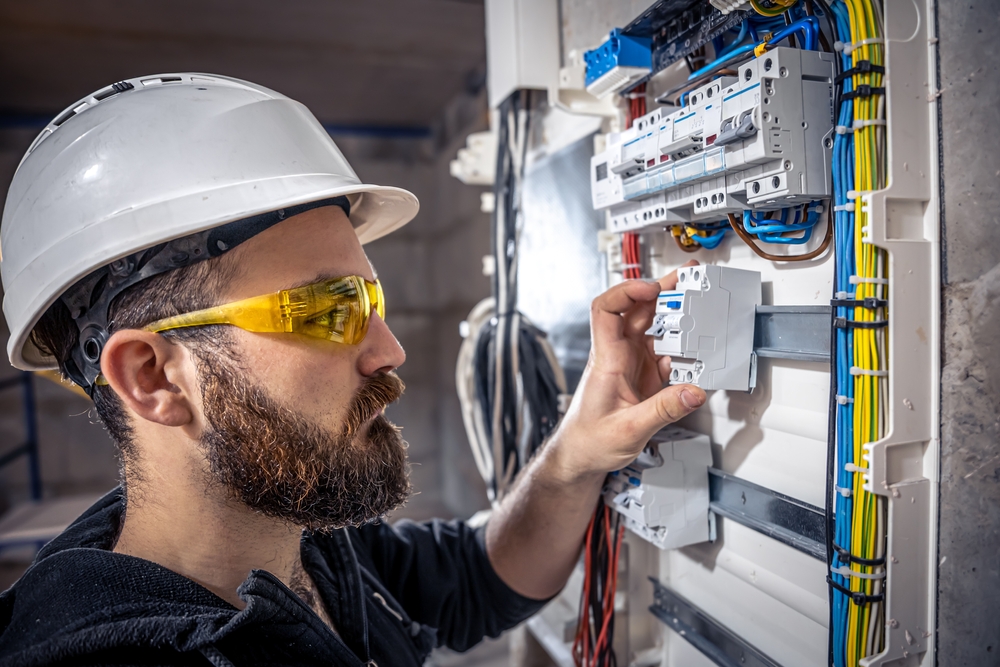
Choosing an electricity meter enclosure for a specific project requires not only technical knowledge but also an understanding of how the equipment will be used. Let’s look at the factors to consider when selecting a meter enclosure.
Focus on the technical specifications
Several technical specifications affect an enclosure’s performance and service life. In brief, a family home needs less capacity than a large building.
- Current-carrying capacity
The maximum current-carrying capacity determines how much current the enclosure can handle without overloading
or overheating. 40 A or 63 A is usually sufficient for a typical household, while larger premises require higher capacity. - Number of electricity meters
The number of meters depends on the project. A family home usually needs one meter, while apartment buildings and commercial premises may need enclosures with several meter positions. - Number of phases
Enclosures are designed for single-phase or three-phase systems. A single-phase enclosure may be enough for a small property, while family homes, larger buildings and industrial premises usually require a three-phase enclosure. - Dimensions and installation method
An enclosure at the property boundary is usually installed as a free-standing plastic pillar. An enclosure fitted into a masonry pillar in a fence, or into a building façade, is usually a recessed model. In some cases, enclosures are also installed on an interior wall or on a pole. - Specific requirements
If the project includes a photovoltaic system or an electric vehicle charging station, choose an enclosure compatible with that equipment.
The right enclosure depends on more than these specifications. Enclosures use different protection devices, cable connections and other components. Learn how to read enclosure codes and what the letters and numbers mean in our glossary.
Do you need an enclosure for a house or a shopping centre?
Every project has specific electrical distribution requirements that affect the choice of enclosure.
- Family homes and small premises
An enclosure for one point of consumption is usually sufficient, typically single-rate or dual-rate,
with the appropriate current-carrying capacity. - Apartment buildings and commercial premises
Larger buildings with several points of consumption use enclosures with multiple meters. Capacity for connecting to the distribution network is also important. - Industrial and commercial projects
Industrial projects need enclosures with high current-carrying capacity and the ability to connect to different electrical networks. Easy maintenance and the option to expand in the future are also important. - Special applications (PV systems and electric vehicles)
For photovoltaic systems or EV charging stations, choose enclosures that support the required connection and protection.
5. Fire resistance
Some applications, such as escape routes, require a higher level of fire resistance. Enclosures must be made from materials that meet fire safety requirements.
Keep up with changes to electricity meter enclosures
 In 2024, the connection requirements of the E.GD distribution company changed. E.GD now requires an outgoing isolating switch to be installed in the meter enclosure at every new point of consumption. This blanket requirement is mainly related to the large number of installed photovoltaic systems, micro-sources and backup power sources. New enclosure types are being developed for these applications, such as the PER 2V2 with an installation switch or the PER 2F, which can control a PV system or an electric vehicle charging station.
It is worth following changes to the connection requirements of E.GD, ČEZ and other distributors. We explain the latest updates clearly in our news section soon after they are published. You do not have to work through complex documents; you can read an easy-to-follow explanation with the relevant context.
Choosing an electricity meter enclosure depends on many factors, including technical specifications, the application’s specific requirements and future changes, such as adding a photovoltaic system or an EV charging station. Choose an enclosure that meets the project requirements and provides reliable, long-lasting service for the electrical installation.