
Circuit Breakers and Protective Devices in Electrical Enclosures
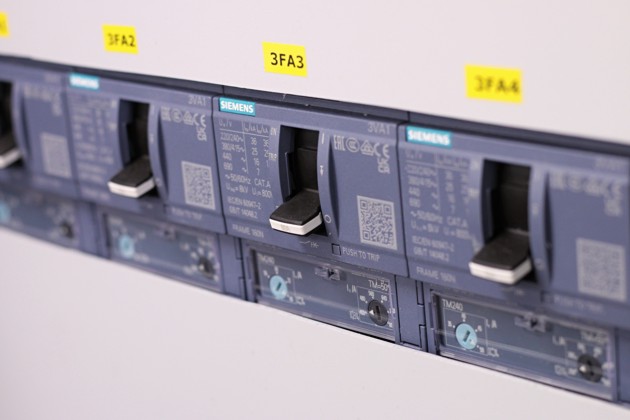
Electrical enclosures commonly contain devices that protect circuits and equipment. Abbreviations make technical documentation, catalogues and wiring diagrams easier to understand.
Electrical enclosures commonly contain devices that protect circuits and equipment. Abbreviations make technical documentation, catalogues and wiring diagrams easier to understand. This article summarises the most common abbreviations and briefly explains the function of each device.
Abbreviation guide
| Abbreviation | Full name | Czech term |
|---|---|---|
| MCB | Miniature Circuit Breaker | Miniature circuit breaker (up to 63 A) |
| RCD | Residual Current Device | Residual current device |
| RCCB | Residual Current Circuit Breaker | Residual current circuit breaker without overcurrent protection |
| RCBO | Residual Current Breaker with Overcurrent protection | Residual current breaker with overcurrent protection |
| MCCB | Moulded Case Circuit Breaker | Moulded-case circuit breaker (above 63 A) |
| ACB | Air Circuit Breaker | Air circuit breaker |
| SPD | Surge Protective Device | Surge protective device |
| AFDD | Arc Fault Detection Device | Arc fault detection device |
MCB – Miniature circuit breaker
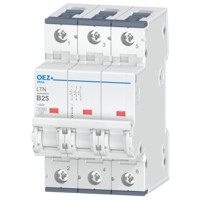 Miniature Circuit Breaker is the most common type of circuit breaker for currents up to 63 A. It protects cables against overloads and short circuits in residential and industrial installations. It is typically mounted on a DIN rail inside an enclosure and is available with different trip characteristics (B, C, D) to suit the load. It is also an essential component of electricity metering enclosures.
RCD – Residual current device
Residual Current Device disconnects a circuit when it detects an imbalance between the current in the live and neutral conductors, indicating leakage current to earth. It protects people against electric shock, but does not provide protection against short circuits or overloads.
RCCB – Residual current circuit breaker without overcurrent protection
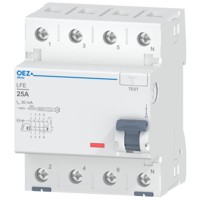 Residual Current Circuit Breaker is a type of RCD designed solely to protect against residual currents. It does not include overcurrent protection and must therefore be paired with a separate MCB. RCCBs are used in domestic and lightly loaded circuits.
RCBO – Residual current breaker with overcurrent protection
Residual Current Breaker with Overcurrent protection combines the functions of an RCD and a circuit breaker in one device. It protects against electric shock, short circuits and overloads. It is particularly useful where space in the enclosure is limited.
MCCB – Moulded-case circuit breaker
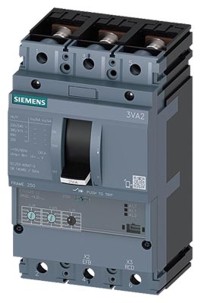 Moulded Case Circuit Breaker is a larger circuit breaker with a higher current rating than an MCB, typically above 63 A. Its trip settings can be adjusted, making it suitable for protecting larger distribution systems, industrial equipment, installations and substations.
ACB – Air circuit breaker
Air Circuit Breaker is designed for very high currents, generally above 1,000 A. It is used in main switchboards and industrial applications. It uses air as the arc-extinguishing medium and can support remote operation and communication.
SPD – Surge protective device
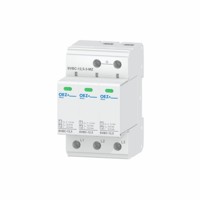 Surge Protective Device protects equipment from transient overvoltages caused, for example, by lightning strikes or switching events in the grid. SPDs are installed at the incoming point of an installation and near sensitive equipment. In some cases, protection is also required on the unmetered side of the electrical installation.
AFDD – Arc fault detection device
Arc Fault Detection Device detects electrical arcs and sparking that can result from damaged conductors or loose connections. It helps prevent fires caused by electrical installations and is used mainly in higher-risk buildings such as timber buildings, schools and hotels.
Understanding the abbreviations for protective devices helps designers, installers and operators of electrical equipment alike. Properly designed protection is the basis of a safe electrical installation.
Device quality matters
When selecting circuit breakers and protective devices, consider not only their technical specifications but also their quality and origin. Cheap, unbranded products may have lower mechanical strength, less accurate tripping and a shorter service life. In an RCD, poor quality may cause a slower or incorrect response to a fault, potentially putting people at risk or damaging equipment. Always choose reputable manufacturers and products with appropriate certification to ČSN EN or IEC standards. Quality devices often also offer better fault diagnostics, remote operation or communication, and a longer warranty.

Join us in supporting Czech manufacturers.
By purchasing our products, you also support many other Czech manufacturers who contribute to the products we make!