
Installing Type 1 Surge Protection Upstream of the Electricity Meter
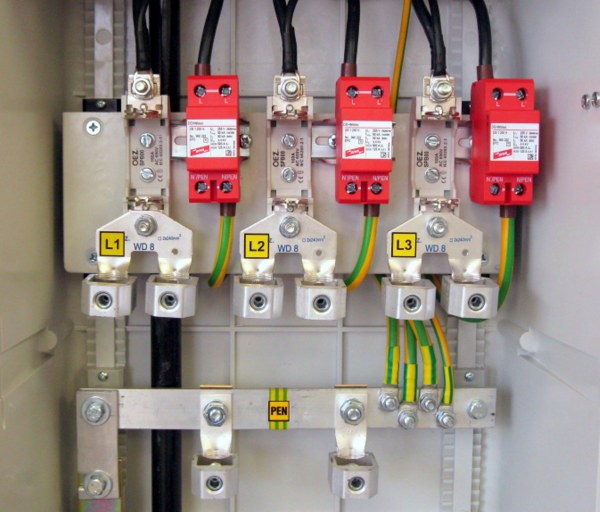
When and where can Type 1 surge protective devices be installed before the electricity meter? A guide to location, distributor approval and enclosure requirements.
Electrical installations supplying both standard electrical equipment and sensitive electronics must reflect current engineering practice. This includes effective protection against lightning and surges. To provide protection even against a direct lightning strike to a building or to a line entering it, surge protective devices (SPDs) must be installed.
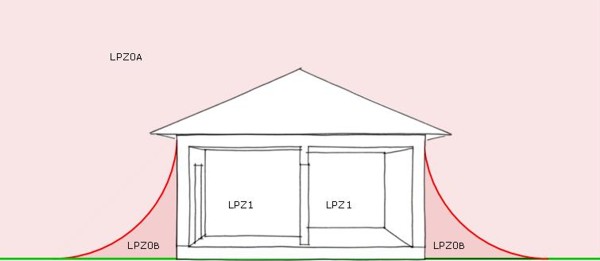
Type 1 SPDs should be installed as close as possible to where the line enters the building (the LPZ 0–LPZ 1 boundary). This helps prevent surges from entering the building installation and provides the technical basis for coordinated Type 2 and Type 3 SPDs further downstream. In some cases, the SPD must therefore be installed in the supply line upstream of the electricity meter.
Distribution companies, however, generally do not want additional equipment requiring customer access to be installed in the unmetered part of the installation. Installing first-stage surge protection (Type 1 SPDs) in this section is therefore a typical case of conflicting interests. Installing SPDs upstream of the meter is addressed separately in energy industry standard PNE 33 0000-5.
The electrical installation designer decides whether surge protection is needed against direct or nearby lightning strikes, based on a risk assessment and the customer’s requirements. A Type 1 SPD may be installed in the unmetered part of a building’s electrical installation only when it is essential to implement the overall lightning protection concept.
SPD location
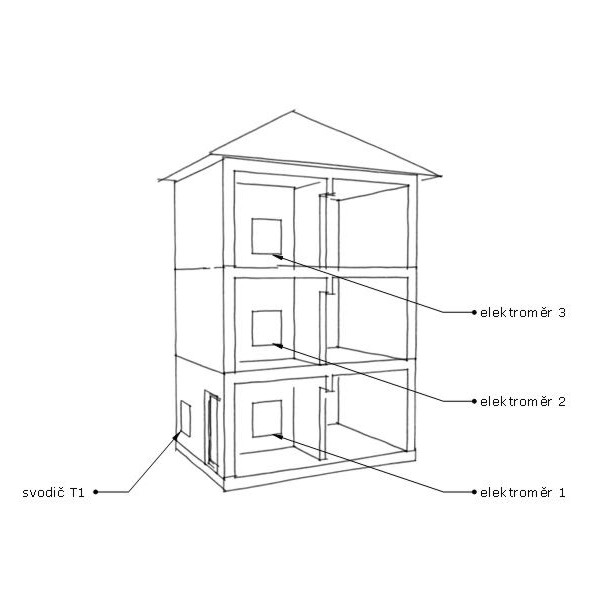
Installing Type 1 SPDs in the unmetered section is not technically necessary in buildings where the electricity meter enclosure is on the façade and there is only one customer connection point. Installation in the unmetered section may be technically justified when a building has multiple customer connection points or when the meter enclosure is inside the building. A Type 1 SPD must not be installed upstream of the service connection fuse enclosure.
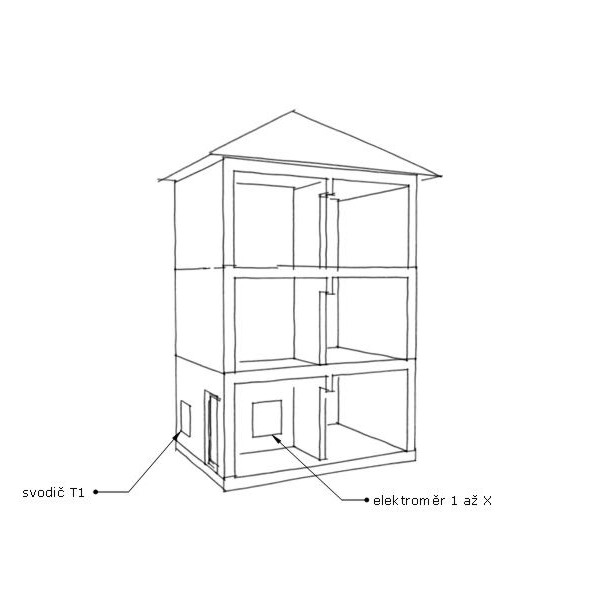
For example, in an older installation where the meter enclosure is inside a family home, there may be a technical reason to place a Type 1 SPD on the façade in the unmetered section. It is also worth considering moving the meter enclosure to the façade or property boundary, in a publicly accessible location, as current connection requirements stipulate. Once the enclosure is moved, the SPD no longer needs to be installed in the unmetered section, and the installation meets current requirements.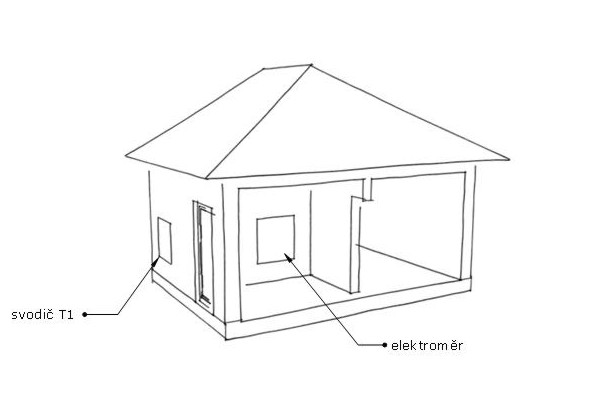
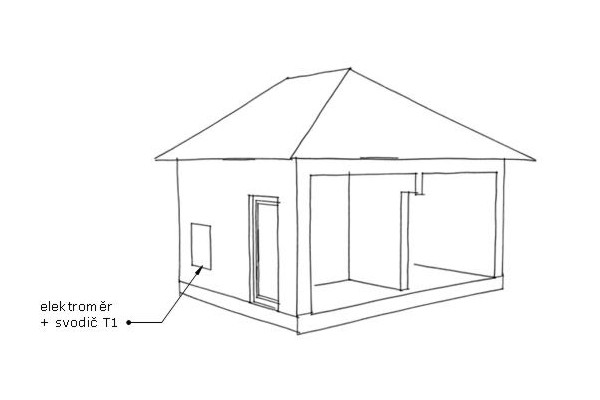
If the meter enclosure is planned for the façade of a family home, an SPD installed in it can simply be connected downstream of the meter. However, if the enclosure contains multiple electricity meters, for example for a home and a business, there is a technical reason to connect the SPD upstream of the meters, in the unmetered section.
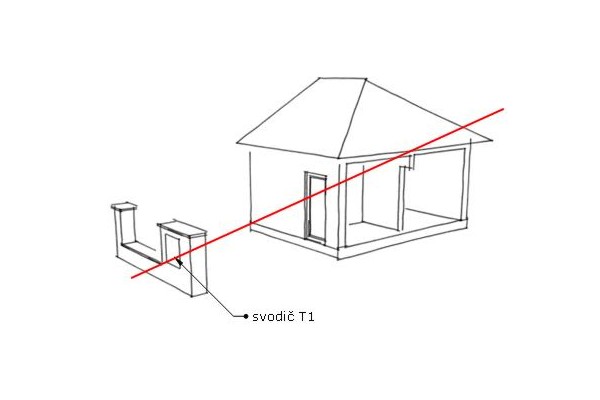
In general, installing Type 1 SPDs in a pillar in front of a building, whether on the metered or unmetered side, is not suitable because the SPD is not located where the line enters the building and therefore is not at the LPZ 0–LPZ 1 boundary.
Selecting an SPD
The electrical installation designer selects the specific SPD type, but the distributor must always approve its installation in the unmetered section and the selected device.
Distributor requirements are strict. If installed in the unmetered section, a Type 1 SPD must use a spark gap or a spark gap plus a series-connected varistor. Varistor-only devices and devices with a varistor and spark gap connected in parallel are not permitted because leakage currents can increase as the device ages.
If an SPD operates, it should not trip the upstream fuses in the fuse enclosure. Unless the SPD manufacturer requires separate backup protection, it is advisable not to install a separate fuse for the SPD. This avoids permanently disconnecting the SPD from the rest of the installation, which would leave it unprotected against surges.
Remember:
- The distributor must approve the SPD connection, location and type.
- The designer decides whether surge protection is necessary based on the risks.
- The installation point for an SPD in the unmetered section must always be sealable.
- SPDs must be inspected regularly, at intervals no longer than four years.
Requirements for enclosures with installed Type 1 SPDs
Enclosures containing Type 1 surge protection conduct lightning currents with high peak values. These can exert significant dynamic, thermal and pressure forces on conductors, including pressure from arc venting in devices with an open spark gap.
To minimise these effects, the installation requirements for Type 1 SPDs must be followed. Because space for these devices is often limited, enclosures specifically selected for their installation should be tested with an impulse current.
With the approval of the relevant distribution system operator, these requirements may be varied when technical circumstances make it necessary.
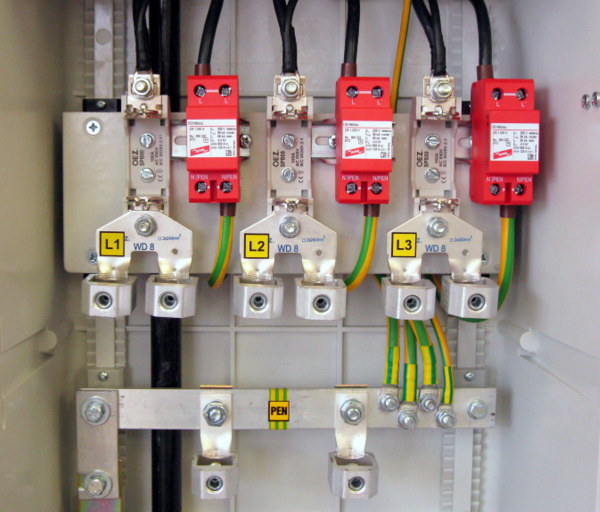
Our electricity meter enclosures and fuse cabinets with surge protection are tested and suitable for installation in the unmetered section. Contact us with your application requirements and we will prepare a quotation.