
What Is a Contactor Used For?
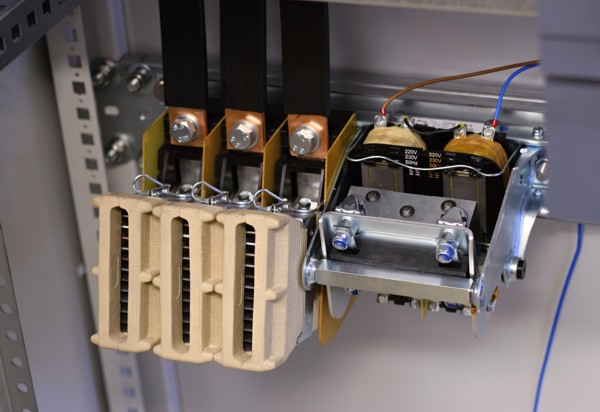
Find out what a contactor does, how it helps switch appliances during off-peak electricity periods, and how tariff control is evolving.
As energy costs continue to rise, people are looking for ways to use available resources as efficiently as possible. Depending on your supplier and contracted tariff, you can save on electricity consumption during off-peak periods. This is often called the night-time tariff, although the off-peak period is not limited to night. Even if your supplier charges the same unit price for peak and off-peak electricity, distribution charges may still be lower during the off-peak period.
The distributor offers a lower rate during off-peak periods to encourage customers to run appliances when the network is less heavily loaded, making more efficient use of the network and helping absorb surplus electricity. Because the off-peak period changes, the distributor installs a tariff switch at the supply point and requires customers to allow their appliances to be controlled within an agreed scope. To use cheaper electricity, you need to install a contactor that automatically switches appliances on during the off-peak tariff. Read on to learn about the benefits of using a contactor to control your appliances.
What is a contactor?
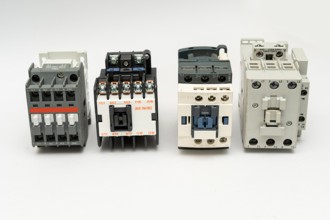 A contactor is an electrical device that usually uses an electromagnet to mechanically operate its switching contacts. It is used to switch an electric current on and off in a circuit. In essence, it is a powerful relay that uses a small current to control a larger one. Contactors are used in industry, automation and machinery, as well as in homes. In households, they are most often used to switch electrical appliances and lighting or to start motors.
It would not work without a tariff switch
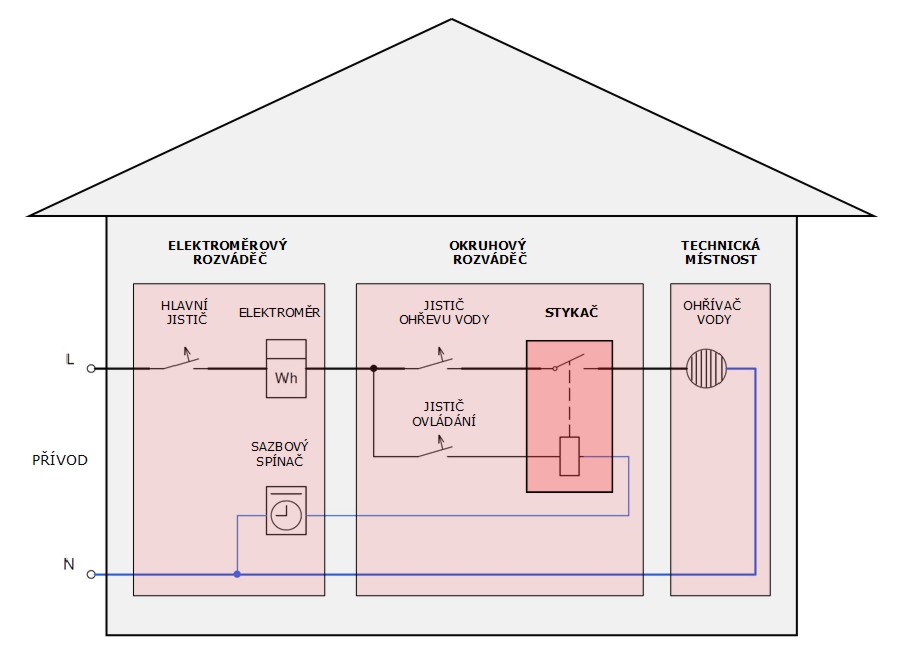
The key component of this system is the tariff switch, which allows the distributor to define when appliances are switched on. The most common system today is HDO (ripple control). The HDO receiver acts as the tariff switch, but it cannot directly switch a high-power appliance carrying a large current, so it needs a contactor. The contactor then switches appliances (most often a water heater) on when electricity is cheaper. When distribution charges are lower, the contactor closes, allowing you to consume electricity at a lower rate and save money.
The wireless future of tariff switches
Traditional HDO-based tariff switches are gradually being phased out. HDO only allows one-way communication over power lines. Modern systems already being introduced use wireless communication via mobile network data. This enables two-way, individually addressed communication with a specific supply point. In these smart grids, electricity meters, relay boxes or smart boxes can act as tariff switches. However, a contactor is still required to switch controlled appliances.
Please remember that wiring a contactor involves working on electrical equipment. If you want to have a contactor installed, contact a qualified electrician.
We will be happy to help you choose a suitable meter cabinet.