
Where Should an Electricity Meter Enclosure Be Located?
Guidance on accessible and compliant locations for electricity meter enclosures in homes, apartment buildings and businesses.
Where should an electricity meter enclosure be located so it is convenient to access and complies with standards and distribution company requirements?
The location also matters for connecting to and consuming electricity. The main requirement is that the enclosure is installed in accordance with the distribution company’s requirements. It is generally placed at the property boundary or in another publicly accessible location so staff can carry out maintenance and meter readings.
An electricity meter enclosure houses the distributor’s meter and measures a building’s electricity consumption. Correct placement makes maintenance, repairs and meter readings possible and protects the meter from damage.
Where should it go?
Always consult the distribution company before work begins. Its requirements for the enclosure location will be stated in the connection agreement or in its statement for the customer premises. General location requirements are set out in the distributor’s connection rules.
When choosing a location for an electricity meter enclosure, consider access to the meter and the risk of damage if an unauthorised person interferes with the enclosure.
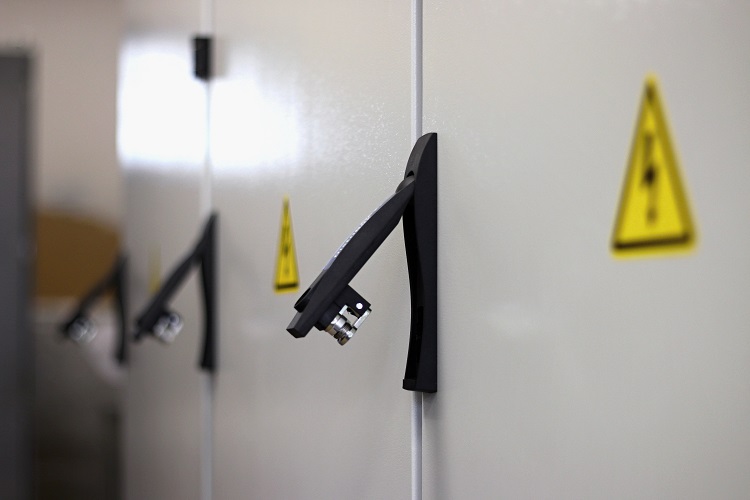
The enclosure should be installed as close as possible to the electricity supply entry point, for example near the distributor’s service connection pillar. It must be accessible to the distributor’s staff, should not be unnecessarily concealed, and the route to it must be unobstructed.
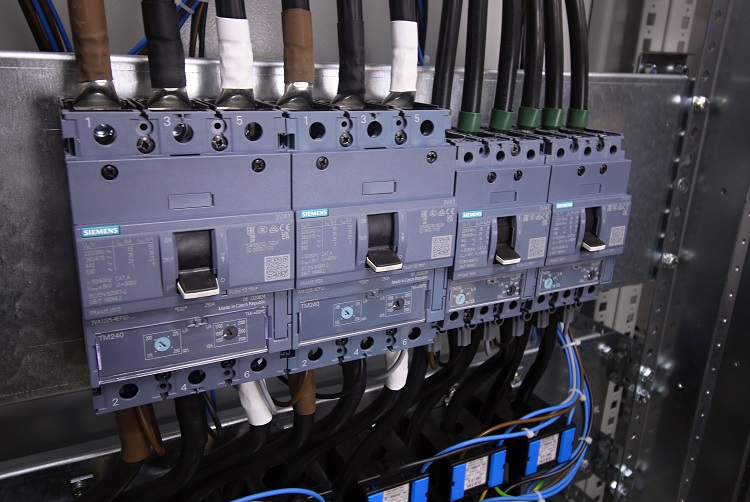
An electricity meter enclosure can be combined with a distribution board for circuit protection within the building. The enclosure must be designed and type-approved for this purpose, and the metering and circuit sections must be separated.
Correct enclosure placement is important for safety and easy maintenance. Follow the distribution company’s instructions.
There must be a level, clear working space in front of the enclosure, at least 80 cm deep and no narrower than the enclosure. The space must allow safe operation. The enclosure must not be installed above stairs.
The centre of the meter should be 1 to 1.7 m above the finished floor or ground (or 0.7 to 1.7 m when the enclosure contains multiple meters).
Apartment buildings
In apartment buildings, meter enclosures are installed in a separate, fire-compartmented and accessible room, or in a corridor or stairwell (not on the stair flight).
Family homes
For family homes and recreational buildings, meter enclosures are installed outside the building in a permanently publicly accessible location. If the building is on inaccessible property, place the enclosure at the property boundary in a pillar in the fence, or at the boundary where it can be reached from outside the property. The enclosure should be as close as possible to the service connection fuse enclosure.
Allotment gardens and cottage areas
In allotment and cottage areas, rows of garages and similar locations, meter enclosures are grouped in one publicly accessible place, as close as possible to the network connection point.
Business premises and shops
At business premises, shops and similar buildings, meter enclosures are generally installed outside the building in a permanently publicly accessible location. In some cases, the enclosure can be inside, provided distributor staff are guaranteed access.
If you are unsure where to locate the enclosure, ask the distribution company.
Key points to remember
- The enclosure must remain accessible to service staff.
- Keep a clear space 800 mm deep and wide in front of it so the door can open at least 90 degrees and it can be operated safely.
- Do not install it above stairs.
- Do not install it on a pole without the pole owner’s consent.
Do not underestimate the location
Choosing the right location for an electricity meter enclosure may seem difficult, but it is important for connection approval and for the distributor to install the meter. The location and enclosure type also depend on the type of building and the electrical equipment it will contain.