
Installation Disconnect Switch in an Electricity Meter Enclosure
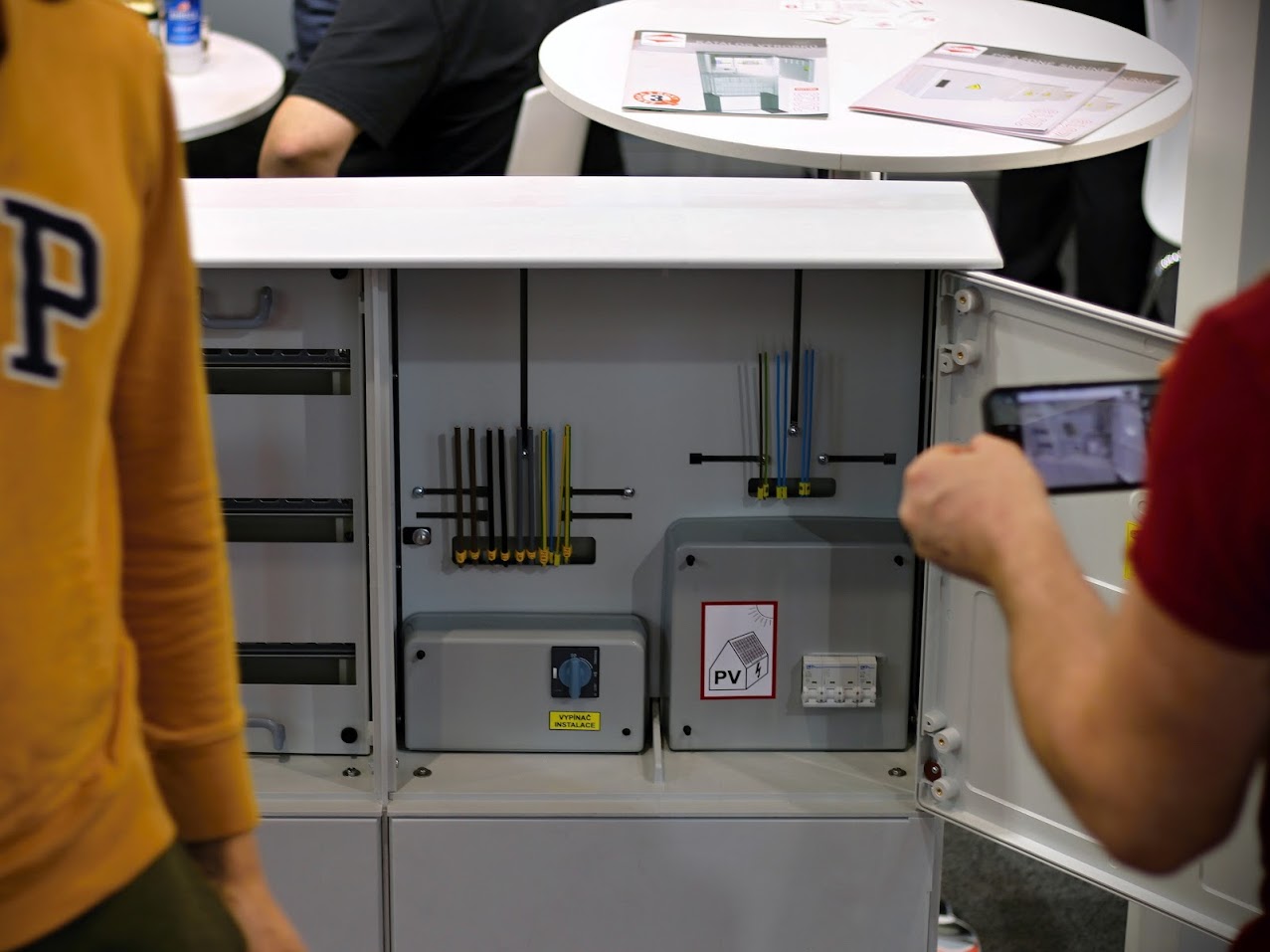
When is an installation disconnect switch required, where should it be placed, and why do the requirements cause confusion? This guide compares the rules of ČEZ Distribuce, PRE Distribuce and EG.D.
When is it required, where should it be located, and why is there confusion?
An installation disconnect switch is a device that distribution companies have increasingly required at newly established or renovated points of delivery. It has become a subject of discussion among designers and installation companies. The seemingly simple requirement to disconnect the electricity meter from the point of delivery is not interpreted consistently or unambiguously in all connection conditions.
While the requirements of some distributors are clear, EG.D's connection conditions contain a conflict between the written text and the diagrams. In practice, this raises the question of whether the disconnect switch must always be installed or only for certain types of metering.
The disconnect switch must be located:
- in the electricity meter enclosure, as the first device connected downstream of the meter (it may also be in the sealed compartment);
- in a combined enclosure (metering and distribution enclosure), as the first device connected downstream of the meter.
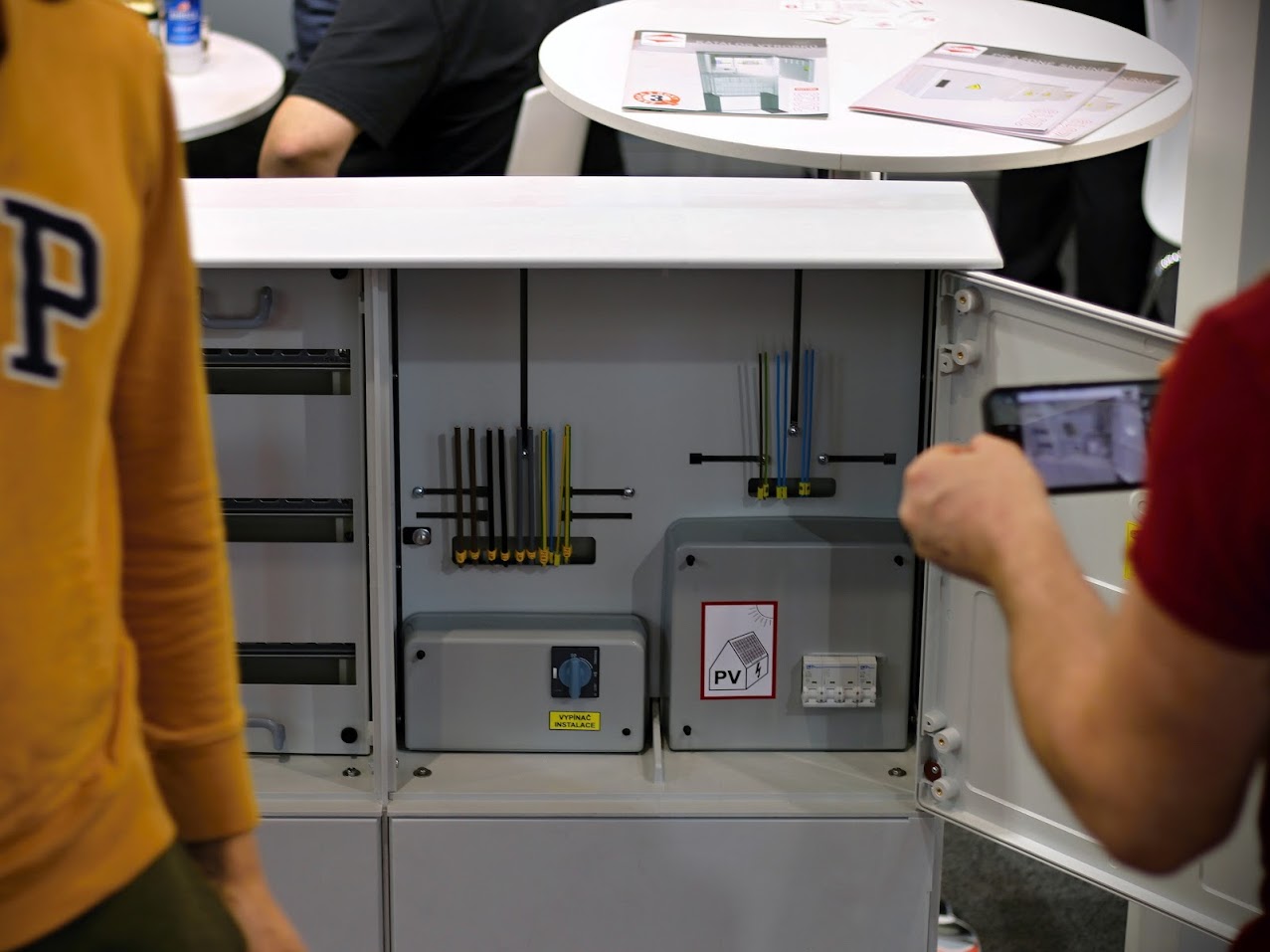
What is the installation disconnect switch for?
The purpose of the disconnect switch is to allow the meter or meter enclosure to be safely disconnected from the entire electrical installation at a point of delivery that may contain a source of electricity, making it safe to handle the meter. It is used especially when replacing a meter. It is also useful for temporarily disconnecting a holiday property, such as a cottage. Disconnecting the installation this way keeps the meter powered, allowing a smart meter to communicate with the distributor.
Under the relevant standards, the switch must meet requirements such as those in ČSN 33 2000-4-46 (selection and erection of devices for isolation and switching) and ČSN 33 2130 (low-voltage electrical installations).
Distributors' requirements are not consistent
 ČEZ Distribuce
ČEZ makes a clear distinction: the installation disconnect switch is required only for direct metering. It is shown in both the written connection conditions and the accompanying diagrams only in enclosures with metering up to 80 A.
For indirect metering, the requirement appears neither in the text nor in the diagrams, so the switch is not required.
The connection conditions of ČEZ Distribuce are available here.
 PRE Distribuce
PRE follows a similar approach: the installation disconnect switch is required in enclosures with direct metering, while it is not required for indirect metering.
The connection conditions of PRE Distribuce are available here.
 EG.D
The situation at EG.D is more complicated.
The written connection conditions (Section 10.3 – Installation disconnect switch) state:
…a disconnecting device must be installed at the output of the electricity meter enclosure to galvanically isolate the meter enclosure from the customer's downstream installation with regard to reverse currents.
This wording appears to apply universally, as if the switch were required for all types of metering, both direct and semi-indirect/indirect.
However, the diagrams included in the same conditions show the installation disconnect switch only for direct metering (up to 80 A). It does not appear in the diagrams for indirect or semi-indirect metering (above 80 A, using current transformers).
This discrepancy causes uncertainty in practice:
- some designers specify an installation disconnect switch in enclosures with metering above 80 A;
- others consider it an unnecessary component that adds tens of thousands of Czech crowns to the enclosure price without support in the technical design.
To resolve this uncertainty, we requested a written statement from EG.D, which clearly says:
The installation disconnect switch is required only for direct metering, i.e. at points of delivery with a main breaker rated up to 80 A.
(Milan Rozporka, TPM Administration, EG.D, s.r.o.)
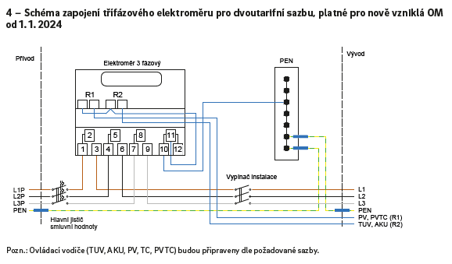
EG.D also does not require an installation disconnect switch in temporary construction-site or other portable meter enclosures used for amusement rides, stalls and similar attractions.
The connection conditions of EG.D are available here.
Technical requirements for the disconnect switch
Where an installation disconnect switch is required, it must:
- match the rated current of the main breaker upstream of the meter;
- be located downstream of the meter (on the metered side of the installation);
- be clearly labelled and accessible without breaking seals;
- disconnect all live conductors (all phases in a three-phase system).
Switch disconnectors or circuit breakers with an isolating function are most commonly used.
In ELPLAST-KPZ electricity meter enclosures, the installation disconnect switch is usually located in the unsealed compartment above the outgoing terminal block. This makes servicing straightforward without disturbing the sealed compartment.
 Why does clarity matter?
In practice, a designer may specify an installation disconnect switch even where the distributor's diagram does not impose this requirement.
The installation company then has to decide whether to:
- fit the enclosure with a switch “to be on the safe side”; or
- rely on the official diagrams and argue that the requirement does not apply universally.
From a technical safety perspective, installing a disconnect switch is never harmful, but it unnecessarily increases costs and makes the design more complex, especially in enclosures carrying higher currents.
Recommendations for designers and installation companies
- Follow both the written text and the diagrams in the connection conditions.
For EG.D, the installation disconnect switch is not shown for indirect metering, which is a significant point. - Check the connection requirements for the relevant region.
Distribution companies may interpret their internal rules differently in some areas. - If in doubt, contact the distributor's technical representative.
Written confirmation by email carries more weight than a general interpretation. - Choose an enclosure that already includes an installation disconnect switch.
For example, PER 1V and PER 2V enclosures already include one.
Summary
- The installation disconnect switch enables the safe disconnection of the meter from the building's internal installation.
- Distributor requirements generally differ, and EG.D's information is contradictory.
- EG.D's written connection conditions appear to require the switch universally, but the diagrams show it only for direct metering up to 80 A.
- An installation disconnect switch is not required for indirect/semi-indirect metering.
Where an installation disconnect switch may be unnecessary
Universal requirements for an installation disconnect switch seem more formal than meaningful, particularly at points of delivery with no electricity source or technological infrastructure.
Typical examples include:
- power supplies for ticket machines;
- integrated rescue system sirens;
- telecommunications infrastructure enclosures;
- power supplies for camera systems or traffic signs;
- and other small points of delivery.
These are small, single-purpose points of delivery with no internal installation, usually connected through a single outgoing circuit protected only by the breaker upstream of the meter. In these cases, a separate installation disconnect switch provides no additional safety benefit. Yet distributors still require it, increasing the complexity and cost of the solution, often without a practical benefit.
Conclusion
An installation disconnect switch is an important safety device, but requiring one universally in every electricity meter enclosure does not always make technical sense.
A clear, consistent interpretation from distributors would help designers and enclosure manufacturers create solutions that are safe, functional and economically proportionate.